Artificial Intelligence: From Ancient Oracle to the Temple of Illusions and Back
jelena
- posted on
- No Comment

The biggest power of intelligence is the ability to make a prediction. This is what distinguished man from animals, and then brought him out of the cave and to the digital age in which we live today. The human hunger for foresight was behind the oldest rituals and was the impulse for the development of many achievements of our civilization. Great oracles, like the one at Delphi in ancient Greece, ruled not only over ordinary people, but kings as well. Science like mathematics and astronomy were developed to serve astrologers to find answers in the stars. For millennia we have been looking for ways to peak in the future in order to make the right decisions. We observed the signs sent from gods and looked for subtle connections between them and significant events happening in our world. If the evening sky is purple, there will be wind the next day. If the flies fly low, it will rain. If a comet appears in the night sky, it means something terrible will happen, a war maybe. Little if anything was known about why these events were connected, if there was any real connection at all (the comet certainly does not announce war). But coincidences were recorded, and as they accumulated over time, they became useful knowledge passed down to the next generations.
Through the scientific method and the power of human curiosity, many laws of nature were defined and explained, and so we have reached a time when it is much easier for us to give an accurate answer to many questions. But we are far from knowing the answers to all the questions that bother us, nor can we figure out the consequences of every action we make. Predicting tomorrow’s dollar value, for example, for today’s businessman is as important as predicting the storm was for the Phoenician maritime merchant.
It was just a matter of time before our civilization developed highly sophisticated tools that could observe coincidences and predict events for us. That tool we call Artificial Intelligence (AI). There are three prerequisites for its development: “smart” algorithms, great computing power to perform the necessary calculations and large amounts of data in digital form from which the algorithms will extract knowledge and translate it into answers. AI serves us to find meaning in a haystack of data about some phenomena. Either because it would be too complicated for us humans to do it, or because it would be too tiring or even completely impossible for us. In a vast number of examples it can notice coincidences that are not visible to human perception.
Machine learning

Knowledge is gained through learning, and when an AI model learns we are talking about machine learning. It is used to analyze a phenomenon whose understanding we want to automate in order to make an informed decision based on the acquired knowledge. It can be an assessment of the value of a used car, stock price prediction, distinguishing cats and dogs in the picture or a benign and malignant tumor on an X-ray, choosing the best candidate for a job or assessing a prison sentence for a criminal, choosing a safe self-driving car or a weather forecast.
The first prerequisite for successful machine learning is to collect a huge amount of data: a lot of examples of something that we want our algorithm to “understand” and translate these examples into digital form, so that the machine can process them. In these examples, we indicate what we are interested in, what we want the algorithm to recognize or calculate. We put aside some of the examples we have, and will use them later to test the success of the model, to check how well it has learned to recognize what we are looking for, or how well it will answer our questions (usually very specific questions). We choose one of many algorithms available, do some adjusting so it fits our data best, and run it through the data we have: first through the ones labeled, so that model learns what is required of it, and then through test data. Based on what it has learned, the algorithm should give us a result that will match the expected result in the test data. If it fails, it means that we need to change the approach, choose another algorithm, better adjust it for our specific case or to collect more data on which to learn. And so, step by step, we are approaching the best solution and our final AI model. The rule is that the more examples we have, the more accurate the model. This is the so-called supervised machine learning, because we show the algorithm exactly what we are looking for.
The way AI is introduced to us by the media is a bit different: it’s about AI that learns on its own, without any human interference or control, and the more it learns the more powerful it becomes. And if it gets access to the Internet, it will gather all the knowledge of this world and inevitably conclude that we, the people, are unnecessary nuisance that need to be eliminated. And there you have an exciting thriller for the movie industrie.
The discussion on whether this fear could become a reality goes far beyond the format of this text. But what we witnessed so far it’s still quite far from creating, or recklessly initiating the creation of superintelligence that could become a threat to us. Hopefully, control methods will be created to prevent such a disaster.
Following the example of …
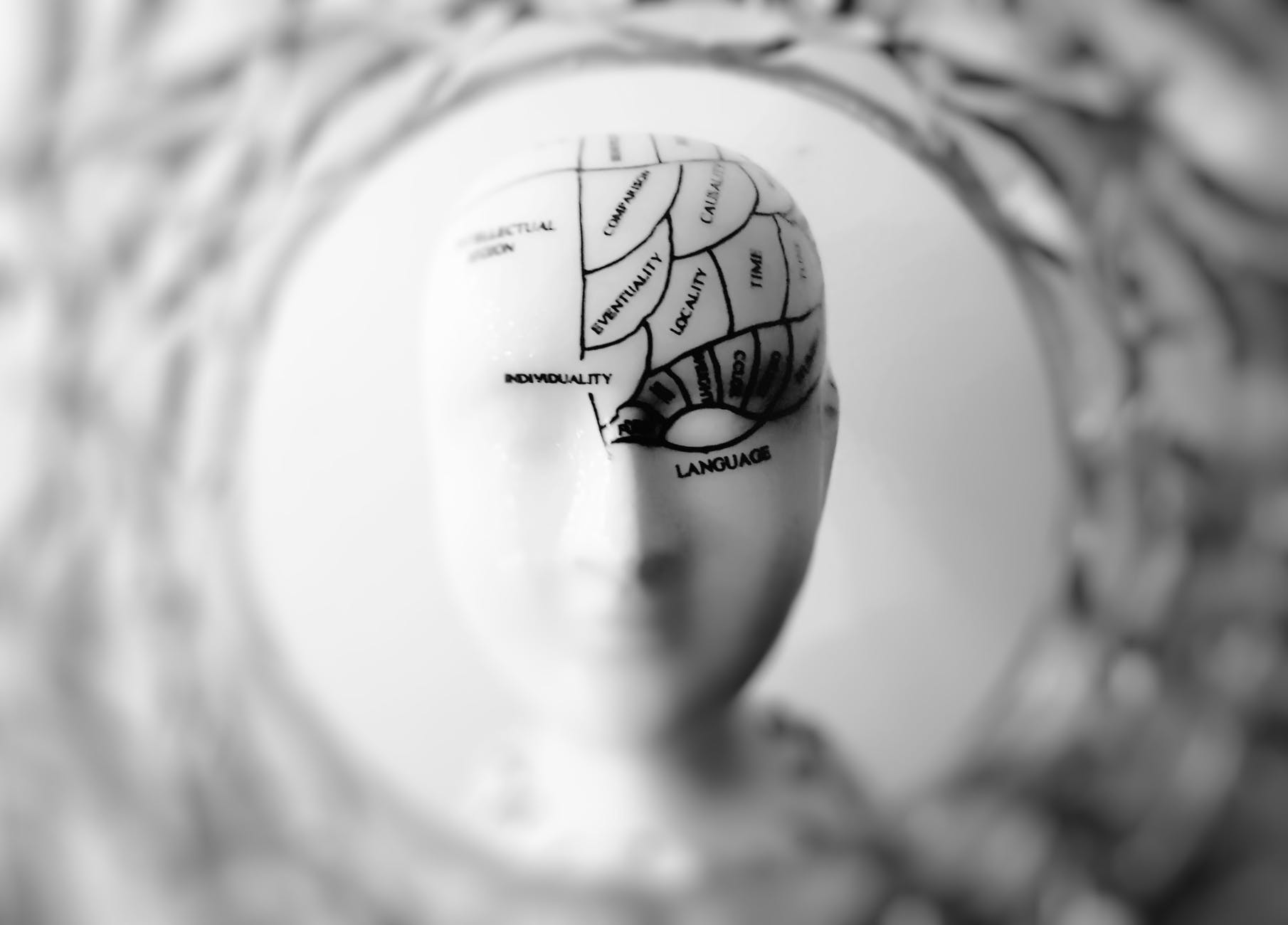
The human brain is an extremely complex set of nerve cells – neurons, which are connected to each other and communicate by electrical impulses. If the goal is to create a system that will be able to reason and make decisions, it’s only logical to turn to the best solution that nature has offered us so far. Based on the structure of the brain, an algorithm called “artificial neural network” was designed. A neural network is software that can be perceived as a network of interconnected nodes, so called artificial neurons. There can be only a few, but also billions of neurons in one network. The more nodes there are, the more computer power is needed to train and use the model. A more complicated algorithm, as a rule, but not always, gives a better result.
The most impressive example of a neural network-based model appeared in the summer of 2020 called GPT-3. Its basic task is to predict the text in the spirit of natural language. In other words, based on the given text (which is the question we ask), it should predict the words that form the answer to our question. In addition to giving answers, it can write a short meaningful text or a news story, generate tweets, write poetry (ok, try to write poetry), translate into various languages and even “speak” the language of computer code, and make some simpler applications.
What sets GPT-3 apart from its predecessors is the enormous amount of data used for learning: the complete Wikipedia and thousands of digital books are just a fraction of the data used to train it. The biggest source was the Internet itself: web content, social media communication, email messages. All together about 500 billion words.
The next thing that was enormous was the neural network that processed all that data, and training it meant calculating 175 billion parameters that define the way the network operate. This number roughly indicates the number of all connections between nodes / neurons. By comparison, the human brain consists of about 80-100 billion neurons, and each neuron has up to 15,000 connections (synapses), so the total number of connections is far, far greater than the number of parameters in this model. And yet, the size of the GPT-3 model is so huge that its training and use makes a considerable CO2 footprint.
How accurate are the answers given by AI?

In May 2018, the GDPR data protection regulations came into force in Europe. It gives every citizen of the European Union the right to know who collects data about him or her, what data and for what purposes, and is given the right to request the deletion of that data, the right to be forgotten (which is not easy to do in the digital world we live in).
One of its consequences is that every EU citizen is given the right to receive an explanation of decisions made using artificial intelligence. In other words, if, for example, AI was used to select a candidate for a job, the rejected candidate has the right to know why the algorithm rejected him/her.
While developing machine learning algorithms, developers race to ensure that the results model produces, matches as closely as possible the values in the test data. For example, if the model is to calculate the value of a house in the real estate market, that value will be compared with the actual prices of the houses in the area. The goal is for the algorithm to guess the actual price as well as possible. Focusing on maximum accuracy, entangled in functions, parameters, hyperparameters and struggling with incomplete data, it’s easy to sometimes miss some important feature. If the model gives accurate results with the available test data, it does not necessarily mean that the same accuracy will be reached in practice. The one who uses the model is usually not a programmer, but a person who uses it as a tool to do a better job. How can one rely on its result, if it’s like a black box, you feed some data in and get an answer, but have no idea why that particular answer?
Husky or wolf?

One of the common applications of AI is object recognition in images. So a few years ago, mobile phone applications could recognize whether there was a dog or cat in a photo, or your face in a video, and then add ears and a muzzle that moved along with you. But in order for us to be able to play with our videos, image recognition algorithms had to be developed.
How to train an AI model to recognize whether there is a husky or a wolf in the photo? This was a well known problem for image recognition, because these animals are similar, and algorithms do not “think” the way we do. When we see a wolf in the photo, primordial instincts are awaken and we become aware of its dangerous teeth and bloodthirsty eyes. When shown a photo of a husky, running through snowy landscapes, we think about the beauty of an animal in the snow. And what does the algorithm do? After the students fed it with piles of photos and successfully trained it to recognize wolves and huskies, they proudly presented it to their professor. And the professor, who already knew something about the problem, fed the algorithm with a bunch of husky photos, only this time not in their usual snowy environment, but surrounded by greenery. The algorithm insisted that there were wolves in the photos. Because the algorithm will not focus its attention on bloodthirsty eyes and dangerous teeth, but on the most obvious difference between the set of pixels that make up the image. In the husky photos used to train the algorithm, there was always snow, and therefore a striking amount of white pixels. It was so obvious that the algorithm accepted it as a sufficient criterion for making a decision: if there is a lot of white in the picture, it is a husky. If not, then it’s a wolf. This may be an interesting academic discussion, but if you have a sheep pen in the mountains and a security system with cameras that should warn you of wolves approaching, the algorithm learned in this way will not save your sheep from wolves in a snowy January.
If something like that happens, who is responsible? In a world where artificial intelligence is used to make decisions that have a big impact on our lives, it is of the utmost importance that it be explainable. The term “Explainable Artificial Intelligence” (Explainable AI or XAI) is a name for a whole new field of developing methods that should allow a person to understand why AI made the decision it made, what it depends on, or how the change in input values reflects in the result. If a doctor uses AI as a tool to determine if an X-ray shows a tumor that is malignant or benign, and AI says that the black shadow on the image is still benign – can he or she fully rely on that assessment? Does the algorithm take into account the patient’s age? Does it have all the information from his health record? What about his parents’ health history? For a doctor to rely on an AI to help him come up with the decision, has to know exactly how it works.
An emotionless bill
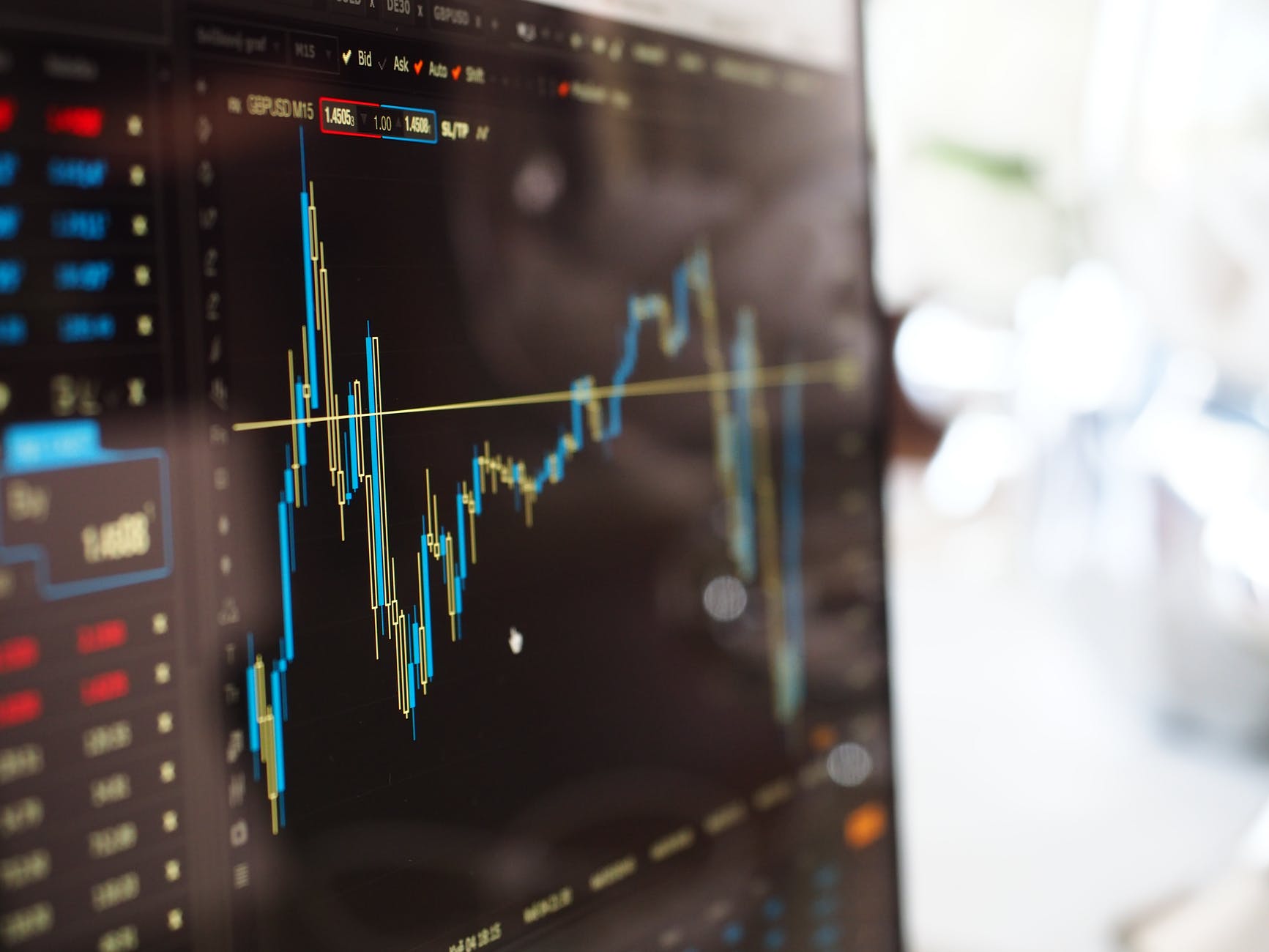
It’s impossible to imagine today’s financial business without the use of algorithms that monitor the stock market and precisely determine the moment to react and buy or sell something, at what price and in what quantities. Algorithms perform a huge percentage of all transactions, without any human intervention. On the Forex platform for currency exchange, over 94% of all transactions are performed directly by various algorithms. That’s because compared to a computer, a person is too slow to act in this dynamic market, and cannot observe and process all market data to make a sufficiently informed decision. It is interesting that one of the recognized advantages of the algorithm is the absence of emotions that interfere with human reasoning.
At first, the way these algorithms worked was known only to the developers who developed them, which left the financial world in ignorance and out of control, and several strange incidents happened that were attributed to a glitch made by an algorithm, that led to serious stock market turmoil. After that, explainability and understanding of trading algorithms became imperative.
Biased AI
Whether we want to admit it or not, bias is deeply rooted in our minds, although we are usually not aware of it. The decisions people make are biased. When the AI model is trained on data incorporating some kind of bias, or tendency towards some values or phenomena, it will inevitably, and often imperceptibly, be imprinted on the AI model, and we will become aware of that only when some bog error occurs.
Artificial intelligence learns from the data we feed to it, and depending on that data we can get completely different models. For example, if two teams make a model for recognizing X-rays, and each team has its own doctor (or team of doctors) who labels the images, we will probably get two models that will have different accuracy. However, their accuracy will not depend so much on the applied algorithms, as it will depend on the experience and expertise of the doctor who did the labeling of the images.
What if the algorithm is learned from completely wrong data? If content related to the most primitive, criminal or pathological behavior is used for learning? At MIT, an experiment took place with an image recognition algorithm called Norman, based on a character from Hitchcock’s film Psycho. Norman learned from photos gathered from dark corners of the web, depicting gruesome murders and all sorts of violence. It was then subjected to a typical test for AI models for shape recognition: the Rorschach test known in psychiatry, in which the test subject has to recognize an object from spilled ink stains on paper. In staines that other algorithms, that learned from images from nature, recognized vases with flowers and people shaking hands, Norman has seen murders and violence. Norman was developed to show the extent to which an AI model depends on the data on which it is trained.
It is a known fact that some of the most advanced image recognition algorithms better recognize faces of white men than dark-skinned women. The reason for this is well-known and banal: the images used to train algorithms to recognize faces are collected from the Internet, where images of fair-skinned men predominate. In a world where face recognition is increasingly used (police, airport control, phone screen unlock …) if we have algorithms that cannot well distinguish the faces of black people, there is a serious chance that someone will be discriminated against because the algorithm replaced it with someone else. A scandal will be remembered from 2015, when Google’s algorithm classified the image of two women of African origin as a gorilla image.
AI as a judge

Algorithms can decide on your college applications or whether you get a job or not. It probably won’t make a final decision, it will be done by someone from the HR, but it will previously reject thousands of applications in order to choose only the most suitable ones, so that a person, with its limited abilities, can choose among a few. Are you sure that, as a woman, applying for a job in a big company, you will have the same chances as the man next to you, no matter the emotion-free algorithm ? What’s the hiring history used for its training?
AI algorithms have been used to help judges decide on the length of a prison sentence in the USA for years . More precisely, the algorithm estimates the risk that the offender will return to the criminal way of life, by taking into account his or her age, previous employment, previously committed crimes etc. These algorithms learn from historical data, so does that mean that one has a disadvantage if being a member of a minority group with more crime records in the past and vice versa? On the other hand, this tool provides judges with a useful tool in drafting verdicts, increasing the efficiency of courts. In this way, due to the reduction of time for administrative activities, judges would be able to draft a larger number of judgments and to devote more time to the part of the procedure in which their knowledge and experience bring the greatest value.
But how accurate and fair will such an algorithm be? These issues are recognized as very important and there are tools and methodologies that are constantly evolving that allow us to understand the way the model makes decisions. When it comes to bias, the problem is more complex. Google, one of the leaders in the application and development of AI, has included the fight against bias among its most important principles. However, it is one thing to detect bias in the data, and tools can help us with that. However, reacting in order to eliminate bias is a job for the developer. And that job is not easy. Google has an Ethics AI team, led until recently by eminent researcher Dr. Timnit Gebru, originally from Ethiopia. However, in late 2020, she was fired after publicly pointing out biases in her own company: how minorities find it harder to get a job and advance in the company, and how often bias appears in AI models. This conflict shows how big a problem we face and how deeply bias is rooted in various aspects of our reality. The process of removing bias from the AI model will require a lot of dedication, effort and creativity.
When GPT-3 was asked how to become more creative, it gave very lucid answer:
I think creative expression is a natural byproduct of growing up in a diverse world. The more diverse the world is, the more you get exposed to different people, to different opportunities, to different places and to different challenges. And the more diverse that is, the more likely you’ll be to be able to put the dots together to form something new. And in many ways, I think if you want to be creative, you have to go for it. If you want to be a writer, you have to write, if you want to be a musician, you have to create music, if you want to be a comedian, you have to create comedy, and the more you create, the more likely it is that you’ll stumble onto some interesting stuff.
To many other questions, however, GPT-3 gave rather meaningless answers and showed that we are still far from creating artificial intelligence that would become smarter than the smartest among us. On the other hand, if we look carefully, through the answers we get from it, we can gain a better insight into the amount of prejudice and bias in the content we have produced and left scattered on the Internet. Maybe we’ll learn a little more about ourselves.
